
.webp&w=3840&q=75)



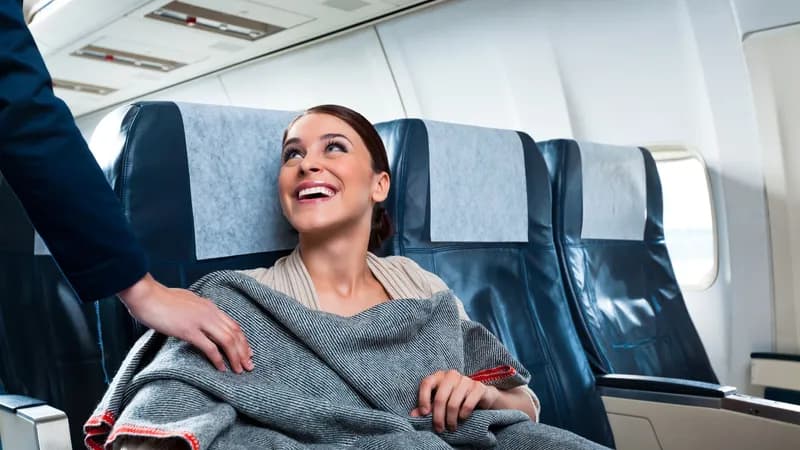
Low cabin temperatures protect passengers from circulatory problems on long-haul flights
Cool Cabin Protects Health

kk
Right after boarding, many feel a shiver run down their spine – the cool breeze flowing through the cabin. Especially when it's summer heat outside, the climate on board often feels like a time travel towards winter. But why does the crew intentionally set the temperature so low? Behind the chill lies a solid reason, which primarily serves the health of the passengers.
Cool air above the clouds
Upon entering a passenger airplane, one thing is immediately noticeable: it is significantly cooler than at the gate. Many travelers quickly reach for their jackets or ask the cabin crew for an extra blanket. Complaints about the cold tend to increase, especially on long-haul flights. Studies show that temperatures usually range between 20 and 24 degrees Celsius – cooler than in many living rooms. However, this is not a coincidence but a calculated safety mechanism.
Airplanes operate at extreme altitudes - cruise flights take place at 10,000 to 12,000 meters above regions with outside temperatures of up to -60 degrees Celsius. To ensure a comfortable and safe environment on board, the cabin air is treated, filtered, and conditioned. Not only temperature plays a role, but also air pressure and oxygen saturation. This creates an environment that may feel cool to many, but ultimately feels safe.
Medical reasons for cool temperatures
Why then risk passengers freezing instead of ensuring a comfortable warmth? The answer can be found in medical research. On flights, there is an increased risk of so-called syncopes – short-term fainting spells. Even under normal pressure conditions and with low oxygen saturation, people in the air are more susceptible to circulation problems than on the ground.
If it gets too warm in the cabin, the risk increases further: the blood vessels expand, blood pressure drops, and the body receives even less oxygen. Studies from the USA confirm that the risk of loss of consciousness significantly increases in overly warm airplane cabins. The relatively cool temperatures help stabilize circulation and reduce the risk of such incidents. To prevent this from becoming a health risk, airlines rely on empirical data and medical recommendations.
Balance between comfort and safety
The setting of the temperature is not an exact science, but rather falls within a range that offers a compromise between comfort and safety. <strong>Lufthansa</strong>, for example, typically sets the cabin temperature between 20 and 24 degrees, with smaller adjustments made by the flight attendants themselves – larger temperature changes must be approved from the cockpit.
Despite all the standardization, there are no fixed international limits for the temperature on board. Instead, the crew responds to the needs of the majority of their guests and reacts flexibly to complaints. As a result, multiple climate zones are sometimes created within an aircraft to ensure the satisfaction of as many people as possible.
"Cool temperatures protect against circulatory problems. Therefore, the temperature on board is kept rather low. The crew ensures a comfortable room temperature for the passengers," explains a spokesperson for Lufthansa.
Other major airlines also follow this philosophy. Investigations by the German aviation authority and the international airline association IATA confirm that the prevention of circulatory problems is the main reason for the intentionally cool cabin temperatures. There are additional factors: less heat also means less ideal conditions for bacteria and germs, which in turn benefits overall health on board.
Outlook: Will the climate on board remain frosty?
It seems that thick sweaters and light blankets will continue to be the best companions for air travel in the future. Since safety and medical health are the top priority, airlines will likely continue to resist the demand for significantly warmer cabin air. However, modern aircraft and intelligent air conditioning systems could allow for more flexible temperature zones in the coming years, enabling individual preferences to be taken into greater account. Until then, shivering above the clouds remains the lesser evil.
Further information is provided by health organizations such as the World Health Organization (WHO) or aviation associations with up-to-date recommendations for well-being while flying.
Advertisement
Advertisement
Advertisement
Poll Of The Day
Wie lange sollte dein perfekter Urlaub dauern?
- A.Kurz & knackig
- B.Eine Woche
- C.Zwei Wochen
- D.Drei Wochen+
- E.Je länger, desto besser
- F.Hauptsache überhaupt Urlaub
LGBTIQ+ News

Prozessbeginn in Sydney - Ex-Polizist bestreitet Mord an TV-Moderator und Freund

Mobilmachung in Russland - Homosexuelle Russen suchen Schutz vor dem Militärdienst

Elfjähriger Junge misshandelt - Italien unter Schock: Teenager filmten über Monate ihre Taten

Hitzlsperger und frühere Angst - Verletzung wurde zum Wendepunkt
Most Read



Advertisement
Video Of The Day
Advertisement
Advertisement
Advertisement
Poll Of The Day
Wie lange sollte dein perfekter Urlaub dauern?
- A.Kurz & knackig
- B.Eine Woche
- C.Zwei Wochen
- D.Drei Wochen+
- E.Je länger, desto besser
- F.Hauptsache überhaupt Urlaub
LGBTIQ+ News
Prozessbeginn in Sydney - Ex-Polizist bestreitet Mord an TV-Moderator und Freund
Mobilmachung in Russland - Homosexuelle Russen suchen Schutz vor dem Militärdienst
Elfjähriger Junge misshandelt - Italien unter Schock: Teenager filmten über Monate ihre Taten
Hitzlsperger und frühere Angst - Verletzung wurde zum Wendepunkt
Most Read
Advertisement
Video Of The Day

Flight attendants warn against shorts and flip-flops on the airplane

Frankfurt-London is Germany's most frequented short-haul route

Innovative travel companions combine safety, comfort, and sustainability.

Free flight seats may not be used arbitrarily

Hotel Cabin

The Cabin

CoolRooms Palacio de Luces

Cargo Sauna Marseille

Great Cinema: Dead Stay Asleep
Summer Cinema Open Air: Casablanca
Summer Cinema Open Air: Cologne 75