
.webp&w=3840&q=75)



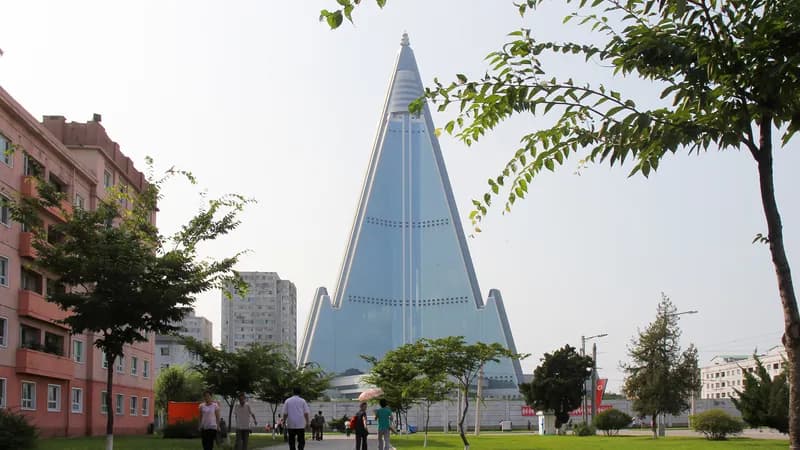
Ryugyong Hotel in Pyongyang: North Korea's failed grand construction remains unfinished
Completion of the Hotel Fails

kk
In the center of Pyongyang, an architectural puzzle rises into the sky: the Ryugyong Hotel, once intended as a symbol of progress, has been unfinished and hauntingly empty for over three decades. With its 105 floors and a height of 330 meters, the structure shapes the cityscape and serves as a silent witness to oversized ambitions – and their failure.
Monument of Contradictions
Anyone looking up at the pyramid-shaped colossus from the streets of North Korea's capital today recognizes many things in it: pride, megalomania, and a touch of tragedy. When construction began in 1987, the goal was clearly defined - the Ryugyong Hotel was meant to be taller and more spectacular than any other hotel in the world. The name itself, translated as "weildragon," suggested success and dynamism. However, just a few years after construction began, the noise of the machines fell silent. The political upheaval in Eastern Europe, especially the collapse of the Soviet Union – North Korea's most important supporter – stripped the state of its financial foundations in the early 1990s. The ambitious plans turned into a bitter reality: the project, which was originally intended to highlight the splendor of North Korean socialism, became a symbol of economic isolation and planning failure. In official city views and maps, the hotel was sought in vain for a while, as it was seen as an embarrassing shadow by the rulers.
Gloomy numbers and failed attempts
Until the construction stop in 1992, immense sums had already been invested – estimates suggest several hundred million US dollars. But that's not all: the current costs for completion are estimated at about two billion US dollars, a sum that would exceed the annual gross domestic product for many of the poorer countries in the world. Between 2008 and 2011, there was a glimmer of hope: an Egyptian investor group completed the facade, making the Ryugyong now shine with a glassy exterior. However, everyday life has still not penetrated the interior.
There were indeed attempts to bring life to the concrete columns. In 2012, international media reported that the renowned Kempinski group was considering opening a luxury hotel. "A look at the political and economic situation is enough to understand the complexity of this decision," said the company in hindsight. The collaboration was ultimately rejected.
The tourist dream that never began
North Korea has gradually opened up in recent years to foreign visitors. However, there has so far been no increase in international travelers like that experienced by other socialist states after similar openings. It is estimated that the annual influx of Western tourists is only a few thousand. For these few, there is at least a wide range of accommodations, from simple hostels to comfortable hotels; however, the Ryugyong is off-limits. The market for such scales is completely absent.
The image that international experts, reporters, and activists have of the scene is correspondingly differentiated:
"The Ryugyong Hotel embodies the discrepancy between staging and reality in North Korea like no other building." – Dr. Martina Kestner, political scientist with a focus on East Asia
Not only the lack of guests, but also political uncertainties deter potential operators. Furthermore, the building remains inaccessible to most citizens and visitors anyway. Even city tours or guided hikes usually end far from the building, which stands almost defiantly over Pyongyang.
Will the ruin remain – or will there be a renaissance?
As spectacular as the Ryugyong Hotel reflects its silhouette in the sunshine, so likely seems its status as a ghostly monument. While smaller tourist initiatives in North Korea are slowly developing and the government is occasionally showcasing new resort facilities for Chinese and Russian guests, there are currently no signs of a short-term opening for the mammoth project.
International investors are showing extreme restraint in light of ongoing sanctions and a lack of legal certainty. Experts from the construction industry suspect that the originally used materials no longer meet modern standards after such a long time. A complete reconstruction – even more so the originally planned use as a luxury hotel – therefore remains at best a fiction from another era. Recent developments surrounding geopolitical tensions in the region further clarify: Predictability is a rare commodity in the case of North Korea.
Conclusion: A landmark full of legends
The Ryugyong Hotel has become a silent protagonist of North Korean history – and remains equally enigmatic for visitors and locals alike. Its future is uncertain, yet its allure remains unbroken. Those who wish to behold it are reminded of the contrasts in North Korea's self-image and worldview: ambition and failure, hope and isolation.
Further information about North Korea, architectural projects, and politically motivated large constructions is provided by renowned organizations such as the Foreign Office, Amnesty International, as well as international travel guides and specialist portals.
Advertisement
Advertisement
Advertisement
Poll Of The Day
Wie lange sollte dein perfekter Urlaub dauern?
- A.Kurz & knackig
- B.Eine Woche
- C.Zwei Wochen
- D.Drei Wochen+
- E.Je länger, desto besser
- F.Hauptsache überhaupt Urlaub
LGBTIQ+ News

Hoffnung für die Community - Wie bewahren wir unseren Mut in schwierigen Zeiten?

36 Jahre Deutsche Einheit - Was die Einheit für die LGBTIQ+-Community veränderte

NHL entdeckt „Heated Rivalry“ - PR-Aktion „Hot for Hockey“ sorgt für Ärger bei Fans

Tom Ford zeigt Haut - Schwule Ästhetik als Provokation auf dem Laufsteg
Most Read


Advertisement
Video Of The Day
Advertisement
Advertisement
Advertisement
Poll Of The Day
Wie lange sollte dein perfekter Urlaub dauern?
- A.Kurz & knackig
- B.Eine Woche
- C.Zwei Wochen
- D.Drei Wochen+
- E.Je länger, desto besser
- F.Hauptsache überhaupt Urlaub
LGBTIQ+ News
Hoffnung für die Community - Wie bewahren wir unseren Mut in schwierigen Zeiten?
36 Jahre Deutsche Einheit - Was die Einheit für die LGBTIQ+-Community veränderte
NHL entdeckt „Heated Rivalry“ - PR-Aktion „Hot for Hockey“ sorgt für Ärger bei Fans
Tom Ford zeigt Haut - Schwule Ästhetik als Provokation auf dem Laufsteg
Most Read
Advertisement
Video Of The Day

PARKROYAL Yangon
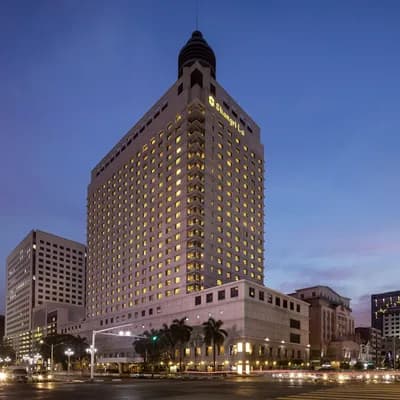
Sule Shangri-La, Yangon
Imperial Palace Seoul
LOTTE City Hotel Myeongdong
Leaning House in Ulm: World Record and Historical Fascination
Ellinikon opens first part of the mega project

Baltic Sea tree house hotel opens in Wangels as a queer-friendly retreat
Rügen presents itself: sustainable tourism and diverse nature experiences
New in Mannheim: Enrico Berlinguer – The Great Ambition
From the Region: Ethiopia Transformed

Sylvester Special - HomOriental Party