
.webp&w=3840&q=75)



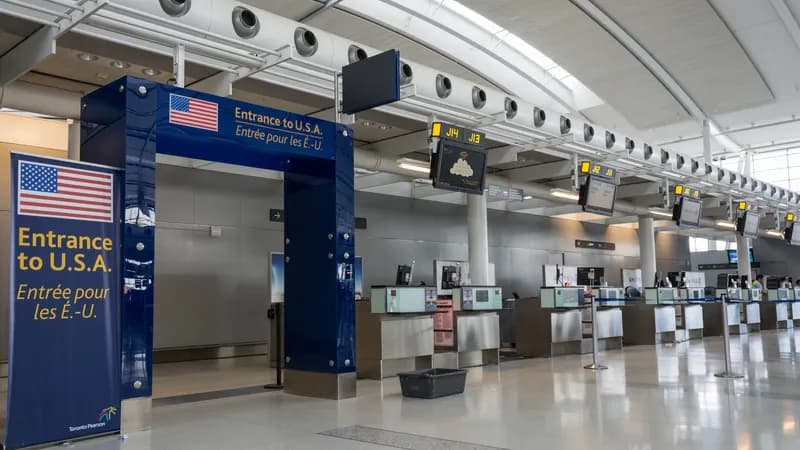
US Border Control: Diverse Families Experience More Intense Interrogations 2024
Stricter Interrogations at US Borders

kk
After a long-planned family visit to the USA, the entry through immigration control at the New York airport is next. The familiar procedure – endless waiting in line, serious faces of the border officials, the taking of fingerprints, and a quick photo – brings a certain excitement not only for casual travelers. But what exactly happens at this crucial point of the American adventure? And which questions should one be prepared to answer?
Thrill at the edge
Suddenly, the actual entry begins: The outer scene – tired passengers after a transatlantic flight, a seemingly endless waiting line, and officials with keen interest in every detail of the travel purpose – heightens the perceived tension. In recent years, there have been increasing reports about how the atmosphere at U.S. airports for international guests has changed. The political tone that led to tightened entry practices nationwide under President Donald Trump seems to linger: There is significant uncertainty about whether everything will go smoothly even with a correct visa or current ESTA, especially since the Foreign Office points out that even with valid documents, there is no guarantee of entry.
But what happens specifically once one reaches the border? The wait of over two hours, during which some people are taken away for further questioning, provides insight into the consequences of thorough investigations. In fact, according to official US statistics, the number of rejections and detentions increased again in 2024 – among other reasons, because authorities are systematically working with data matching and background checks.
Questions upon questions – and the attempt to expose contradictions
The actual control involves much more than the known data collection. It is the officer's questions that can be surprising and often delve into private matters. What is the purpose of your trip? Where will you be staying? What route have you planned, and what does the accommodation situation look like? There is also a special focus on the professional and family circumstances – for example, employers, family relationships, or visa categories must be specifically named. Those who provide demonstrably contradictory information can expect to be examined more closely or even to be denied entry. Especially for stays for educational purposes, such as the popular J-1 visa for high school students, there is a thorough investigation into how the student status is documented and how the trip is organized.
Impressive is how precisely the authorities already know about many details in advance: The answers from travelers are compared with the information in the ESTA document or visa application. Days before the departure, border control officers can access data and possible pre-screenings.
Families are asked particularly attentive questions.
Especially in families, the personal dynamics play a role. It can happen that spouses and children receive targeted individual questions. While the nervousness can sometimes increase ("Have I ever liked a critical social media post?" or "Is there anything unproblematic on my laptop?"), the overall impression often determines the next steps. According to the experience of many travelers, laptops or smartphones often remain in the bag – nevertheless, the European data protection association recommends being aware that a search is certainly possible in case of suspicion. In rare cases, even social media activities or cloud files may be reviewed.
Also gifts, souvenirs, and the stay during the various stages of the journey are topics: Which host mother receives a bottle of <strong>Cachaça</strong>, who stays with whom for how long? The goal is a plausible, transparent travel profile. Despite all fears, the conversations were friendly for many travelers, although always ending with the famous "stern look" of the officials.
"Even if everything is correct: those who appear unprepared or unsure will stand out. Authenticity and precision in the information significantly speed up the checks," said a U.S. consular officer in Frankfurt.
Between new normality and vigilant calmness
The reality at the US borders today is different from just a few years ago. Authorities continuously subject foreign visitors to background checks – whether through preliminary analyses, interview questions, or the evaluation of digital traces. Even in 2024, it is evident that travelers from Germany currently have to expect an invitation to a more in-depth conversation more often than before. According to official statements, the US Border Protection is explicitly concerned with safety, identity verification, and open communication.
Anyone who can travel with a verifiable itinerary, correct visa documents, and a plausible story – and conveys this convincingly and calmly – will typically be allowed to enter without major issues. Nevertheless, it is always advisable to allow sufficient time for entry, declare smaller gifts according to customs regulations, and check one's own information in advance.
For questions regarding entry requirements, residence permits, or data protection in the USA, it is worth checking the pages of the Foreign Office or the US Embassy, as well as reputable consumer protection organizations.
For further information, please contact official authorities and reputable travel agencies.
Advertisement
Advertisement
Advertisement
Poll Of The Day
Wie lange sollte dein perfekter Urlaub dauern?
- A.Kurz & knackig
- B.Eine Woche
- C.Zwei Wochen
- D.Drei Wochen+
- E.Je länger, desto besser
- F.Hauptsache überhaupt Urlaub
LGBTIQ+ News

Trey Cunningham selbstbewusst - Rekorde und Blick Richtung Olympia

Kerle in besonderer Tracht - Ein Outfit, das die Fantasie schwuler Männer umtreibt

Netflix und LGBTIQ+ - Viele queere Sichtbarkeit unter den Top-Serien

Mordversuch mit Bierflasche - Mann niedergestochen – weil Angreifer ihn für schwul hielt
Most Read



Advertisement
Video Of The Day
Advertisement
Advertisement
Advertisement
Poll Of The Day
Wie lange sollte dein perfekter Urlaub dauern?
- A.Kurz & knackig
- B.Eine Woche
- C.Zwei Wochen
- D.Drei Wochen+
- E.Je länger, desto besser
- F.Hauptsache überhaupt Urlaub
LGBTIQ+ News
Trey Cunningham selbstbewusst - Rekorde und Blick Richtung Olympia
Kerle in besonderer Tracht - Ein Outfit, das die Fantasie schwuler Männer umtreibt
Netflix und LGBTIQ+ - Viele queere Sichtbarkeit unter den Top-Serien
Mordversuch mit Bierflasche - Mann niedergestochen – weil Angreifer ihn für schwul hielt
Most Read
Advertisement
Video Of The Day

2025: More International LGBTQIA+ Family Tourism

Summer 2025: Inclusive Family Vacation with Queer Perspectives

USA loses significantly in safety for queer travelers

LGBTIQ+ Travel: Individual Encounters and Authentic Vacation Experiences Beyond the Mainstream

CSD Demo Bremerhaven

CSD Duisburg – Demonstration for Diversity, Respect, and Acceptance

CSD Bremen 2026 – Demonstration Parade

CSD Weiden Final

BCN Checkpoint

Checkpoint Zürich

Bureau of General Services—Queer Division
