
.webp&w=3840&q=75)



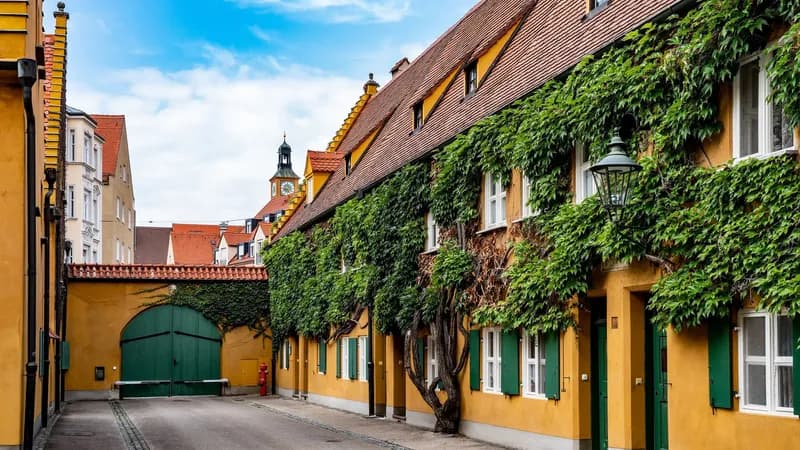
Fuggerei in Augsburg attracts 200,000 visitors
88 Cent Rent for Those in Need

kk
The oldest existing social housing complex in the world has recently garnered even more attention from German-speaking travelers: The Fuggerei...
The oldest existing social housing project in the world has recently gained even more attention from German-speaking travelers: The Fuggerei in Augsburg, founded by merchant Jakob Fugger in 1521, attracts over 200,000 visitors each year. What appears from the outside to be a picturesque row of quaint old town houses reveals itself upon closer inspection as an extraordinary travel destination and a unique social experiment that today offers a home to those in need for just 88 cents annual rent. Recent figures on visitor trends and the continued operation by the Fugger Foundation demonstrate how vibrant Fugger's legacy remains in modern times.
The most important things at a glance
- The Fuggerei in Augsburg has existed since 1521 as the world's first social housing complex.
- Residents pay only 88 cents in rent per year but must meet certain requirements.
- More than 200,000 tourists visit the ensemble each year.
- The charitable Fugger Foundation ensures the continued existence of the facility to this day.
A tour through 500 years of lived history
Entering the Jakobsplatz means stepping into a unique, enclosed world in the heart of Augsburg. Here, 67 houses with 142 apartments, alleyways, a church, a beer garden, and even several small museums are arranged – the Fuggerei resembles a walkable historical document. Visitors can view original furnished apartments from past centuries and learn how little the principles of social welfare have changed since then. However, the affordable annual rent can only be paid by Catholics from Augsburg who are officially recognized as in need. With an entrance fee starting at 8 euros per adult, the Fugger Foundation provides insights into a functioning social model.
The conditions: More than just symbolic rent
But it's not just the rent that draws attention. In addition to neediness and religious affiliation, the lease still obliges tenants to pray three times daily for the founder, Jakob Fugger. This continues to be an uncontrolled ritual that testifies to how closely religion, society, and housing were intertwined in the 16th century. Anyone returning home after 10 p.m. pays a small fee at the gate – a tradition that continues to accompany daily life into the 21st century as a charmingly quirky element. The additional costs for the apartments, which are about 60 square meters in size, amount to around 90 euros per month according to current figures.
Sustainable financing through diverse activities
The extraordinary housing project is still funded today by the non-profit Fugger Foundation, whose income comes from forestry, real estate, wind energy, and other economic sectors. Particularly travelers interested in history, social policy, or architecture experience during the tour through the homesteads not only a fascinating era of welfare but also a vibrant district that is still actively used today.
In the coming months, various events on the history of social housing are planned, which the Fugger Foundation will publicly inform about. This way, the Fuggerei remains not only a tourist attraction but also a laboratory of living urban culture, making the trip to Augsburg distinctive.
Advertisement
Advertisement
Advertisement
Poll Of The Day
Worauf achtest du als queerer Mensch bei der Wahl deines Reiseziels zuerst?
- A.Sicherheit und Akzeptanz
- B.Preis und Reisekosten
- C.Natur, Kultur und Sehenswürdigkeiten
- D.Queere Szene und Events
- E.Klima und Wetter
LGBTIQ+ News

Regenbogen-Steine für alle - Florida Pride profitiert von Spendenaktion

Razzia in queerem Zentrum - Trans* Community fordert Aufklärung von der Polizei

LGBTIQ+-Schutz in der Ukraine - Neue Versprechungen von Selenskyj

Israel wählt neue Knesset - Netanjahus Zukunft ist offen
Most Read




Advertisement
Video Of The Day
Advertisement
Advertisement
Advertisement
Poll Of The Day
Worauf achtest du als queerer Mensch bei der Wahl deines Reiseziels zuerst?
- A.Sicherheit und Akzeptanz
- B.Preis und Reisekosten
- C.Natur, Kultur und Sehenswürdigkeiten
- D.Queere Szene und Events
- E.Klima und Wetter
LGBTIQ+ News
Regenbogen-Steine für alle - Florida Pride profitiert von Spendenaktion
Razzia in queerem Zentrum - Trans* Community fordert Aufklärung von der Polizei
LGBTIQ+-Schutz in der Ukraine - Neue Versprechungen von Selenskyj
Israel wählt neue Knesset - Netanjahus Zukunft ist offen
Most Read
Advertisement