
.webp&w=3840&q=75)



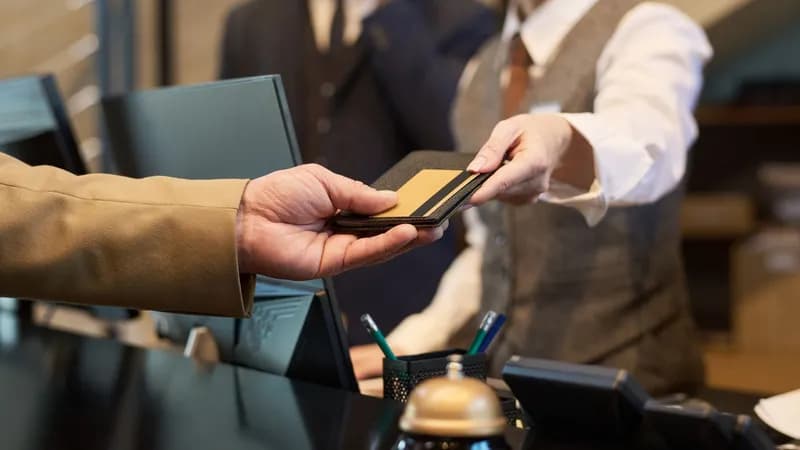
Hotels increasingly require credit cards at check-in
First, it must be clear

kk
Upon entering many hotels, the credit card takes on a key role: Since May 2024, more and more establishments in Germany are implementing...
Even upon entering many hotels, the credit card plays a key role: Since May 2024, more and more establishments in German vacation regions are consistently implementing mandatory credit card deposits during check-in. This measure is causing discussions among travelers, as even pre-paid bookings are not exempt from it. The trend has concrete consequences for hotel practices and influences planning for short trips as well as for longer stays.
The most important things at a glance
- More and more hotels in Germany will require a credit card at check-in without exception starting in May 2024.
- The credit card serves as security for additional costs and potential damages.
- The permitted height and duration of the card blocking depend on the room category and property standard.
- The booking conditions of the hotels usually state in advance whether a credit card is required.
- Travelers must check payments after their stay; an immediate refund is provided for unauthorized deductions as per EU directive.
Credit card as universal security in hotel everyday life
Those traveling through Germany are encountering stricter procedures in many hotels: The credit card is no longer just a convenience, but a prerequisite for a smooth check-in. According to the German Hotel Association, operators have been recommending this security measure for some time. Travelers and business guests notice it immediately: the card is not only shown but also a certain amount is blocked for the duration of the stay. This practice provides hotels with calculable security against minibar consumption, open restaurant bills, or damage to inventory. According to the European Consumer Centre, the procedure is permissible if it has been clearly communicated in advance.
Height, transparency, and legal situation of card blocking
At the center of the issue is the question of how much money can be reserved on a credit card and how transparent this process is. Consumer advocates demand clarity: hotels must clearly indicate the amount that will be withheld and how long it will be blocked. The more upscale the establishment, the larger the reserve can be, but the principle of proportionality still applies. After checking out, the amount must be released no later than 14 days. However, those who forgo their credit card and do not present it at check-in risk being denied check-in despite having a valid reservation if this was clearly required in the booking. According to experts, the legal situation is inconsistent when a spontaneous demand is made at reception without prior notice.
What travelers need to pay attention to具体的.
Guests should read the booking conditions carefully in advance, especially when unusual credit card requirements are involved. After the holiday, it's worthwhile to take a close look at the invoice. Unauthorized or excessive charges can usually be clarified with the hotel after consultation. If a refund is not issued, card providers or banks can help, with the EU Payment Services Directive mandating quick refunds if the charged amount was unauthorized. Different rules may apply in other European countries, so it is advisable to inform oneself about the customs in the destination country before booking, advise legal experts like Karolina Wojtal from the European Consumer Centre.
The next practical step for those booking is to check their credit card before traveling, ensuring it is valid and has enough available credit. Traveling without a credit card becomes noticeably more difficult in many hotels.
Advertisement
Advertisement
Advertisement
Poll Of The Day
Wann beginnt für Dich der Urlaubskick?
- A.Schon Monate vorher, direkt nach dem Abschicken der Buchung
- B.In den Wochen davor beim Recherchieren von Ausflugszielen und Restaurants
- C.Beim Kofferpacken am Tag vor der Abreise
- D.Am Tag der Abreise auf dem Weg zum Flughafen oder Bahnhof
- E.Erst in dem Moment, in dem ich das Hotelzimmer betrete
- F.Der Kick kommt gar nicht, ich bin vor der Abreise nur gestresst
LGBTIQ+ News


Most Read




Advertisement
Video Of The Day
Advertisement
Advertisement
Advertisement
Poll Of The Day
Wann beginnt für Dich der Urlaubskick?
- A.Schon Monate vorher, direkt nach dem Abschicken der Buchung
- B.In den Wochen davor beim Recherchieren von Ausflugszielen und Restaurants
- C.Beim Kofferpacken am Tag vor der Abreise
- D.Am Tag der Abreise auf dem Weg zum Flughafen oder Bahnhof
- E.Erst in dem Moment, in dem ich das Hotelzimmer betrete
- F.Der Kick kommt gar nicht, ich bin vor der Abreise nur gestresst
LGBTIQ+ News
Most Read
Advertisement
Video Of The Day

Italy's highest court allows hotels to refuse tap water

Credit Card Saves Delayed Car Rental Booking

Booking.com: Food and Music Are the Most Annoying Things on a Flight

For the First Time in the Gay Sauna: Your Guide for a Relaxed Visit

Cardiff Marriott Hotel

Hotel Glärnischhof by Trinity

Hotel Cram Barcelona

Hotel C Stockholm

Sylvester Special - HomOriental Party

CSD Düren - Demo

Middance Crisis – The Party for Groundhogs and Early Risers (Summer Special)