
.webp&w=3840&q=75)



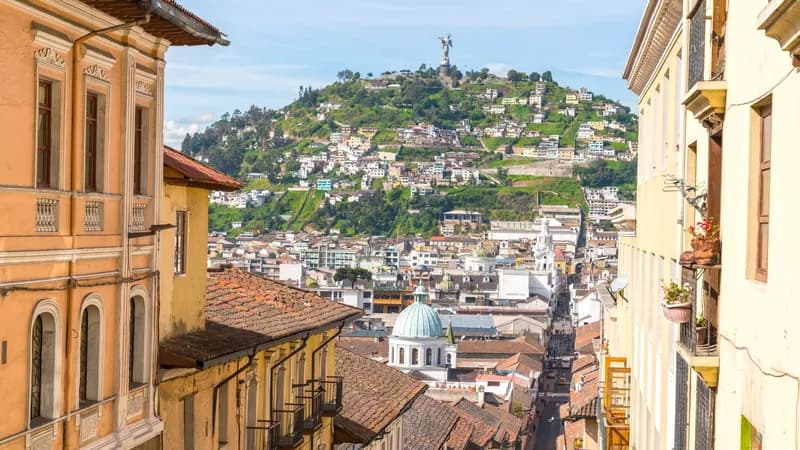
LGBTQ+ Friendly Offers in Quito Enrich Stopover Before Galápagos
LGBTQ+ friendly stopover in Quito

kk
Those who embark on the trails of Charles Darwin and cross the Pacific will find more than just a hint of evolution on the Galápagos Islands. Nowhere else is the proximity to wildlife felt as intensely as in this remote archipelago, which has captivated adventurers, naturalists, and seekers of relaxation for centuries. Today, visitors experience a rugged volcanic landscape where an unusually large variety of unique animals calls home among black lava rocks, white sandy beaches, and lush highland forests.
Vulkan Islands at the Origin of Species
The Galápagos archipelago, located about 1,000 kilometers west of the Ecuadorian mainland, feels almost timeless – yet it has a tumultuous history. As early as the 17th century, pirates used the islands as a base, drawn by their strategic location along Spanish trade routes. While seafarers once considered the giant Galápagos tortoises as nourishing provisions, the arrival of European whalers and traders marked a profound transformation. The massive exploitation of whales, seals, as well as tortoises and other animals brought many species to the brink of extinction. Introduced plants and animals – a total of over 1,400 species – have since threatened the delicate balance of the ecosystem. Today, scientists and conservation organizations, along with the local population, are taking the protection of this breathtaking island world more seriously than ever. According to current data, the Galápagos Islands are home to around 9,000 animal species, a large portion of which are endemic.
A crucial turning point came in 1936 when the area was designated as a nature reserve, and later nearly 97 percent of the land area was designated as a national park. Supported by international initiatives, the preservation of natural diversity here is now considered one of the greatest success stories in species protection.
Encounters between legends and habitats
Those seeking adventure usually start in Quito at an altitude of nearly 2,850 meters – an ideal starting point to get accustomed to the South American way of life. Culinary highlights, colorful markets, and a small but vibrant nightlife district with LGBTQ+-friendly venues provide a varied stopover before the flight to the islands.
On Galápagos itself, small expedition ships like the luxurious "Evolve" bring only a few guests at a time to remote bays. This keeps the number of visitors manageable, and ecologically sensitive regions are better protected. Those who choose to stay on one of the larger islands can book day trips to the most fascinating places – including the tortoise breeding station "La Galapaguera" on San Cristóbal or the Charles Darwin Research Station on Santa Cruz.
Accompanied by knowledgeable local guides, a world full of surprising encounters unfolds: sleeping sea lions cuddle in the harbor, marine iguanas bask on sun-heated basalt, and blue-footed boobies perform their courtship rituals just a few meters from the beach. On short hikes, while snorkeling in crystal-clear bays, or paddling along forested coasts, visitors experience animals such as Galápagos penguins, Nazca boobies, land iguanas, and colorful crabs up close.
"If the giant tortoises were removed from an island, the entire ecosystem would face collapse in a short time," explained the nature guide Sofia Darquea emphatically during a walk through the highland meadows for a travel group. "Because everything is connected."
Between Protection and Challenges
The Galápagos National Park relies on strictly regulated visitor quotas and active protection by trained rangers. Daily, only selected groups of up to 100 people are allowed to access certain beaches, nesting sites, or viewpoints at the same time, always accompanied by a guide. UNESCO, in collaboration with Ecuadorian authorities and NGOs, consistently monitors compliance with the regulations, supports ongoing research projects, and promotes sustainable development of soft tourism.
Despite all successes, the islands face lasting challenges. Climate change accelerates changes in habitat, invasive species and introduced diseases threaten both fauna and flora. Actions such as reducing single-use plastics and international solidarity initiatives are more important than ever to preserve the delicate balance of these islands. The number of visitors remains limited to under 300,000 travelers per year, which is remarkably moderate compared to their biodiversity and in comparison to other protected areas.
Looking ahead: The future of the islands
Inspiration and engagement are palpable everywhere in Galápagos – among the experienced natural guides, the researchers at the Charles Darwin Station, and not least among the guests who return home as ambassadors for the preservation of this unique World Heritage site. The long-term protection of the archipelago relies on education, international cooperation, and a careful approach to natural resources. Researchers advocate for enhanced monitoring of endangered species; new projects for rewilding and strengthening local communities are continually being initiated.
For travelers, Galápagos remains a yearning destination – not only as a natural wonder but especially as a living symbol of successful collaboration between humans and the environment. Those who explore here with open eyes will witness pure authenticity and a conservation effort that can serve as a model worldwide.
For further information on protecting the islands and tips for sustainable travel, we recommend organizations such as the Charles Darwin Foundation, WWF, or the official website of the Galápagos National Park.
Advertisement
Advertisement
Advertisement
Poll Of The Day
Wie lange sollte dein perfekter Urlaub dauern?
- A.Kurz & knackig
- B.Eine Woche
- C.Zwei Wochen
- D.Drei Wochen+
- E.Je länger, desto besser
- F.Hauptsache überhaupt Urlaub
LGBTIQ+ News

Der Oktober hat mehr zu bieten - SCHWULISSIMO Oktober 2026: Die neuen Ausgaben

Ashton Summers geht viral - User küren Darsteller für Hüftschwung zum „Golden Boy“

Wirbel um Jockstrap - Nasses Tennis-Outfit überrascht Fans und Community

Ein Kuss verändert alles - Bisexualität im Fokus: Neue Netflix-Serie „Minerva Academy“
Most Read


Advertisement
Video Of The Day
Advertisement
Advertisement
Advertisement
Poll Of The Day
Wie lange sollte dein perfekter Urlaub dauern?
- A.Kurz & knackig
- B.Eine Woche
- C.Zwei Wochen
- D.Drei Wochen+
- E.Je länger, desto besser
- F.Hauptsache überhaupt Urlaub
LGBTIQ+ News
Der Oktober hat mehr zu bieten - SCHWULISSIMO Oktober 2026: Die neuen Ausgaben
Ashton Summers geht viral - User küren Darsteller für Hüftschwung zum „Golden Boy“
Wirbel um Jockstrap - Nasses Tennis-Outfit überrascht Fans und Community
Ein Kuss verändert alles - Bisexualität im Fokus: Neue Netflix-Serie „Minerva Academy“
Most Read
Advertisement
Video Of The Day
LGBTQ travel agency offers sustainable luxury trips in the Amazon
Sullivan Catskills: LGBTIQ+ friendly offers meet tourist boom
Inclusive Luxury: St. Barths Resort Welcomes LGBTIQ+ Travelers

Brazil: new leaders in LGBTQIAPN+ tourism
Galapagos Eco Friendly

JW Marriott Quito

Casa Joaquín Boutique Hotel

Sheraton Quito Hotel

Sitges Pride Gay Village

Saturday Night Gay Warm-Up Party
Queer Meeting