.webp&w=3840&q=75)

Lima: Metropolis between colonial heritage and queer diversity
Parliament hampers LGBTI rights

kk
Lima – Encounter with a metropolis of contrasts: In hardly any South American city do history, modernization, and social change collide as strikingly as here on the Pacific. A journey to this million-inhabitant city reveals how cultural diversity, colonial heritage, and new spaces for queer people intertwine to create a unique urban experience.
Queer visibility in vibrant diversity
Lima has around eleven million inhabitants and is a melting pot of diverse life realities. The center is characterized by baroque architecture and sprawling squares, but especially the district of Barranco today represents change and creativity. Here, in the neighborhood of galleries and street art, queer and alternative spaces open up, where drag shows, movie nights, and exhibitions take place. This happens despite the fact that there is still no marriage equality in Peru, and queer people continue to fight for societal acceptance and protection.
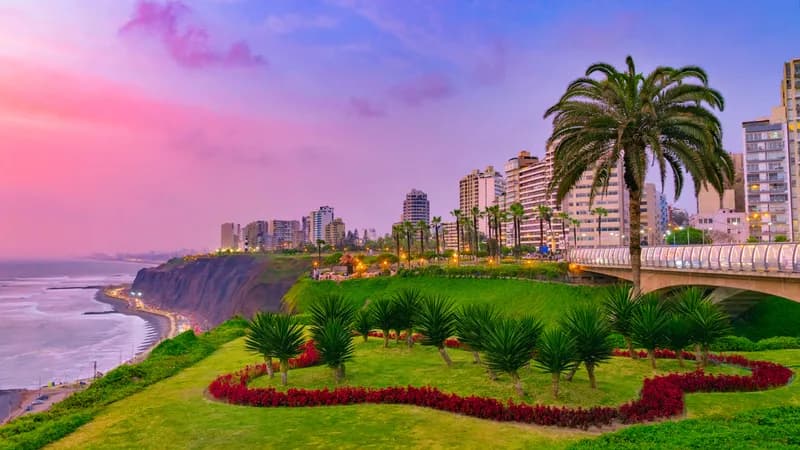
A few kilometers further, in urban Miraflores, the famous Malecón – the long waterfront promenade on the cliffs – provides a protected meeting point for couples of various identities. In the Parque del Amor, art and lived diversity intertwine, especially in June, when colorful rainbow flags flutter at cafés and boutiques. Lima is becoming one of the most queer-friendly metropolises in South America and attracts more than 50,000 people with the annual Marcha del Orgullo – a number that is explicitly political given the lack of legal equality.
"The social acceptance is steadily growing in urban centers, even though rural areas are still hardly touched by this change," explains an activist from the Marcha del Orgullo Lima.
Between colonial splendor and millennia-old cultures
The historical heart of Lima beats at the Plaza de Armas, flanked by the cathedral and the government palace. The old town has been a UNESCO World Heritage Site since 1991 and tells the story of the city's colonial rise since 1535. Just a few minutes away lies Huaca Pucllana, a monumental pyramid from pre-Incan times. In the Museo Larco, thousands of pre-Columbian artifacts— including explicitly homoerotic ceramics— open up new perspectives on Peru's history, where various sexual orientations were visible long before colonization.
Persistent contradictions, new horizons
Lima remains a city of extremes: While Parliament blocks progress on queer rights, local initiatives are establishing solid places in urban everyday life. For visitors, the metropolis presents a blend of tradition and a willingness to change – and it's exactly this that fuels its enduring energy. Those who stroll along the Malecón today, marvel at street art in Barranco, or delve into past worlds at the Museo Larco experience a city that bears traces of its history, yet looks boldly toward the future. What will Lima look like in ten years – and how much of its creative power will queer communities be able to unleash in the future?
Advertisement
Advertisement
Advertisement
Poll Of The Day
Wie lange sollte dein perfekter Urlaub dauern?
- A.Kurz & knackig
- B.Eine Woche
- C.Zwei Wochen
- D.Drei Wochen+
- E.Je länger, desto besser
- F.Hauptsache überhaupt Urlaub
LGBTIQ+ News

Trey Cunningham selbstbewusst - Rekorde und Blick Richtung Olympia

Kerle in besonderer Tracht - Ein Outfit, das die Fantasie schwuler Männer umtreibt

Netflix und LGBTIQ+ - Viele queere Sichtbarkeit unter den Top-Serien

Mordversuch mit Bierflasche - Mann niedergestochen – weil Angreifer ihn für schwul hielt
Most Read
Advertisement
Video Of The Day
Advertisement
Advertisement
Advertisement
Poll Of The Day
Wie lange sollte dein perfekter Urlaub dauern?
- A.Kurz & knackig
- B.Eine Woche
- C.Zwei Wochen
- D.Drei Wochen+
- E.Je länger, desto besser
- F.Hauptsache überhaupt Urlaub
LGBTIQ+ News
Trey Cunningham selbstbewusst - Rekorde und Blick Richtung Olympia
Kerle in besonderer Tracht - Ein Outfit, das die Fantasie schwuler Männer umtreibt
Netflix und LGBTIQ+ - Viele queere Sichtbarkeit unter den Top-Serien
Mordversuch mit Bierflasche - Mann niedergestochen – weil Angreifer ihn für schwul hielt
Most Read
Advertisement
Video Of The Day
Brazil: new leaders in LGBTQIAPN+ tourism
Washington, DC: LGBTQ Community benefits from urban cultural change

Boston 2025: LGBTQ+ Culture and Queer Offerings on the Rise
Perth establishes itself as a safe destination for LGBTQIA+ travelers

The Queer Archive

JW Marriott Hotel Lima
Maricafé - Café • Bar & LGBT BookStore

Lima Lima bar

Stuttgart PRIDE - Political Demonstration
CSD Bremen 2026 – Demonstration Parade

Raising the Rainbow Flag + Demo