
.webp&w=3840&q=75)


Queer Travelers Discover US National Parks: Diversity and Sustainable Conservation
Queer Travelers Strengthen Nature Conservation

kk
Experience America's natural jewels – From Hawaii to Maryland
Those who embark on a quest to discover the most beautiful travel destinations in the USA will uncover a delicate treasure map brimming with grand natural spaces and surprising stories. A journey from the emerald green coasts of Kauai to the white sandy beaches along Maryland's Atlantic coast illustrates how diverse and spectacular these states guard their greatest treasures.
Spectacular island landscapes and dramatic coasts
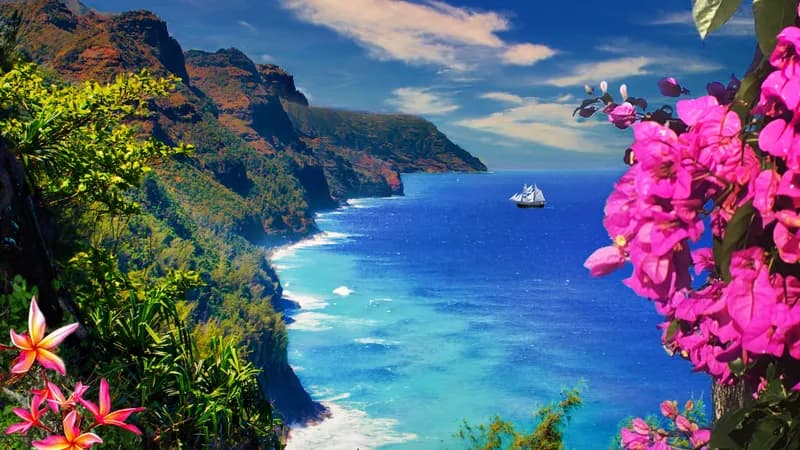
The Hawaiian island of Kauai, with its Nā Pali Coast, is synonymous with paradise-like wilderness. Powerful rock spires, draped in lush green, rise above azure blue bays, while waterfalls cascade into sacred valleys. This scenery resembles a set from "Jurassic Park" and remains strictly protected, as the steep cliffs can only be accessed by boat or a challenging hike. Just the view from the water of the rugged cliffs ranks among the top of the bucket list for true nature lovers.
Another water world awaits visitors in Idaho: Shoshone Falls, often referred to as the "Niagara of the West." With a powerful height of 65 meters, they even surpass their famous counterpart at the border between the USA and Canada. While tourists enjoy the mist at the edge of the cliffs, locals proudly recount stories of legendary travelers who specifically journeyed here along the Oregon Trail.
From Prairies, Forests, and Caves: Unknown Wonderlands in the Midwest
Those who associate Illinois only with Chicago's skyline will be pleasantly surprised in Starved Rock State Park. Deep canyons, shaped by gigantic floodwaters from the last Ice Age, make the park an oasis filled with waterfalls and moss-covered sandstone walls. Hiking trails wind through majestic oak forests and secluded rock crevices that will delight every photography enthusiast.
At the southern end of Lake Michigan, the Indiana Dunes transport you to a dune world that could hardly be more unexpected. Stretching nearly 25 kilometers, bright sand hills line the shore, framed by wetlands, prairies, and hardwood forests – a biodiversity that represents one of the highest levels of species richness within the US National Park System.
Iowa, on the other hand, impresses with relaxed water activities: The small town of Okoboji is nestled between three huge lakes, whose shores invite camping romance and boat tours. Even the indigenous peoples chose the blue triangle as their home. Today, Okoboji is a hidden gem for anglers and families looking for a laid-back summer escape.
Untamed prairie and hidden worlds beneath the earth
Kansas preserves the last four percent of the once endless North American prairie with the Tallgrass Prairie National Preserve. The continuous bellowing of the bison serves as a reminder of how close beauty and threat are for many species. The gentle hills glow in yellow and violet in May and June when wildflowers bloom and monarch butterflies flutter thousands across the sky.
In contrast, there are the dark mysteries beneath the meadows of Kentucky: The Mammoth Cave National Park System takes visitors into the largest known cave complex on Earth – with over 670 surveyed kilometers to date. Underground rivers and massive limestone cathedrals are home to extremely rare animal species. Despite the hot summer temperatures outside, there is an eternal coolness below in the caves.
Mysterious swamp landscapes and wild Atlantic beaches
In Louisiana, the Honey Island Swamp offers a fascinating mix of vibrant nature, myths, and shadows: Alligators glide through the water, black bears appear in the thicket – and sometimes sightings of the legendary, ape-like "Swamp Monsters" are reported. The pristine swamp area near New Orleans is considered one of the most biodiverse wetlands in North America and is of high ecological value.
In the far northeast, on the rugged coast of Maine, the Acadia National Park awaits with a postcard-like idyll that alternates between pine forests, rocky coves, and photogenic lighthouses. From the granite peaks, one looks out over the Atlantic, where whales leap and bald eagles soar. Acadia is not only America's oldest national park east of the Mississippi but also a prime example of a successful combination of nature conservation and gentle tourism.
Very different is the picture further south on Assateague Island on Maryland's Atlantic coast: here, wild horses gallop freely over the dunes, a sight like out of old Western movies. According to legend, they are survivors of Spanish shipwrecks – from earlier centuries, when the great age of explorers and pirates began along this coast. The horse population is closely monitored, especially after storms like Hurricane Dorian, when their safety made headlines nationwide.
Voices from Nature and Animal Protection
"Our wild horses are a national symbol and a natural treasure that we must protect – especially in light of extreme weather and growing tourism pressure." — Jane Thompson, Ranger on Assateague Island
Current figures from national park statistics show that visitor numbers at many conservation areas have significantly increased after the pandemic – while at the same time stricter protection rules have been enacted in many places, such as for rare habitats or endemic animals. In 2023, the Acadia National Park alone counted over 4 million guests, which brings new challenges for sustainable visitor management.
How the future shapes natural spaces
The growing popularity of these fascinating regions is increasingly accompanied by discussions about the preservation of flora, fauna, and unique cultural landscapes. Particularly sensitive ecosystems such as the Tallgrass Prairie National Preserve or the wetlands in Louisiana are under the influence of climate change. At the same time, states and authorities are investing in new protection programs for endangered species and in educational offerings that strengthen awareness of responsible tourism.
Travelers who bring a desire for exploration and an appreciation for natural beauty will hardly be satisfied in the featured US states. The diversity ranges from steaming tropical vegetation to glacial sandstone landscapes and prairie grass, all the way to wild horses by the sea – America remains a country full of impressive contrasts.
Further information and practical tips on nature conservation and sustainable travel in the USA are provided by organizations such as the National Park Service, the World Wildlife Fund, and local Environmental Education Centers.
Advertisement
Advertisement
Advertisement
Poll Of The Day
Wie lange sollte dein perfekter Urlaub dauern?
- A.Kurz & knackig
- B.Eine Woche
- C.Zwei Wochen
- D.Drei Wochen+
- E.Je länger, desto besser
- F.Hauptsache überhaupt Urlaub
LGBTIQ+ News

Hoffnung für die Community - Wie bewahren wir unseren Mut in schwierigen Zeiten?

36 Jahre Deutsche Einheit - Was die Einheit für die LGBTIQ+-Community veränderte

NHL entdeckt „Heated Rivalry“ - PR-Aktion „Hot for Hockey“ sorgt für Ärger bei Fans

Tom Ford zeigt Haut - Schwule Ästhetik als Provokation auf dem Laufsteg
Most Read


Advertisement
Video Of The Day
Advertisement
Advertisement
Advertisement
Poll Of The Day
Wie lange sollte dein perfekter Urlaub dauern?
- A.Kurz & knackig
- B.Eine Woche
- C.Zwei Wochen
- D.Drei Wochen+
- E.Je länger, desto besser
- F.Hauptsache überhaupt Urlaub
LGBTIQ+ News
Hoffnung für die Community - Wie bewahren wir unseren Mut in schwierigen Zeiten?
36 Jahre Deutsche Einheit - Was die Einheit für die LGBTIQ+-Community veränderte
NHL entdeckt „Heated Rivalry“ - PR-Aktion „Hot for Hockey“ sorgt für Ärger bei Fans
Tom Ford zeigt Haut - Schwule Ästhetik als Provokation auf dem Laufsteg
Most Read
Advertisement
Video Of The Day
New LGBTQ Travel Trends 2021: Diverse Dream Destinations for Queer Vacations
LGBTQ+ Friendly Road Trip: Queer Hotspots and Nature in the US West
Train Travel to US National Parks: Sustainable Tourism on the Rise

2025: More International LGBTQIA+ Family Tourism

Queer Tours France

Bureau of General Services—Queer Division

Pride Tours NYC

The Legacy Walk

QUEER AS PUNK NRW Premiere

CSD Demo Bremerhaven

Christopher Street Day Landkreis Stade 2026