.webp&w=3840&q=75)

Castile and León: Queer Diversity in Rural Travel Paradise
Small Places Show Openness

kk
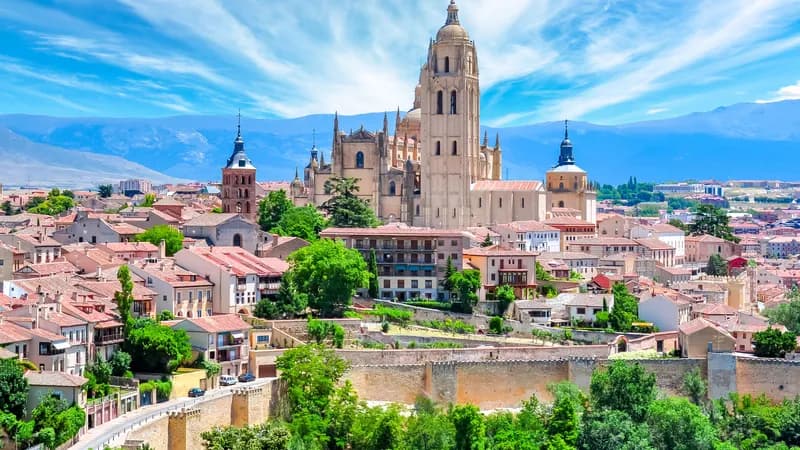
In the midst of Spain's vast plains, far from the tourist mainstream of the coasts, curious travelers in Castile and León discover a world that connects history, nature, and surprisingly much openness. Here, where Gothic cathedrals and ancient universities shape the urban landscape, where wine matures in the cellars and quiet landscapes invite you to breathe deeply, an inclusive scene is emerging – particularly welcoming for trans* women and men, lesbians, gay men, and queer travelers.
Diverse treasures far away from the coastal hustle and bustle
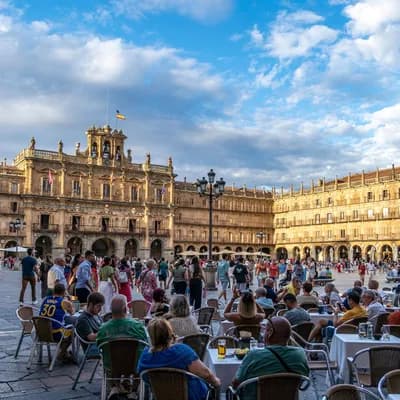
History literally lies on the streets in cities like Ávila, Salamanca, or Burgos, whose UNESCO-protected buildings make every day trip a time travel experience. The oldest Gothic cathedral in Spain, the Gothic towers of León, the vibrant student life in Salamanca – all of this is authentically Spanish, unpretentious, and real. Additionally, small towns like Frías and Zamora consciously position themselves as inclusive destinations and welcome visitors with open arms.
Anyone who truly wants to experience the region should travel slowly: for example, on the trails of the Camino de Santiago, between Romanesque churches and medieval castles, along fragrant vineyards in the world-renowned Ribera del Duero. Over 23,000 hectares of vines and internationally awarded Tempranillo wines create a paradise for connoisseurs.Also for active holidaymakers.Inside, Castile and León offers a paradise with over 200 Romanesque buildings along cycling paths such as the Via de la Plata or the Camino Francés.
Diversity under the rainbow sky
In Valladolid, Salamanca, and León, a vibrant queer community has developed. Especially the summer Zorrilla Festival in Valladolid brings visibility, art, and music together and is now considered a highlight of queer culture in Northern Spain. While the region does not yet have specific LGBTQIA+ legislation at the national level, hospitality and committed actors like the local initiative Fundación Triángulo are already making a noticeable difference.
"We are experiencing that smaller places today bravely ensure visibility – true openness has long since arrived here," describes <strong>David Sánchez</strong>, chair of a regional diversity network (Source: Triángulo Foundation, as of 2024).
Inviting prospects between tradition and trend
Castile and León is exemplary of the quiet revolution of inclusion. Amid medieval charm, warm summer nights, and creative festivals, travelers today experience a region that remains open to both tradition and change. The Spanish culture of welcome has been further strengthened by the recent increase in queer visitors: in 2024, according to official data, over 12% of LGBTQIA+ travelers indicated that they became aware of Castile and León specifically because of the region's authenticity and safety.
If you're longing for more than just sun and beach, you'll find not only artistic stones and sublime landscapes here, but also new friendships and horizons. Will Castile and León become one of Europe's top queer destinations in the future? A visit, especially with a view over a golden high plateau and a glass of local red wine, offers a promising hint.
Advertisement
Advertisement
Advertisement
Poll Of The Day
Wie lange sollte dein perfekter Urlaub dauern?
- A.Kurz & knackig
- B.Eine Woche
- C.Zwei Wochen
- D.Drei Wochen+
- E.Je länger, desto besser
- F.Hauptsache überhaupt Urlaub
LGBTIQ+ News

Trey Cunningham selbstbewusst - Rekorde und Blick Richtung Olympia

Kerle in besonderer Tracht - Ein Outfit, das die Fantasie schwuler Männer umtreibt

Netflix und LGBTIQ+ - Viele queere Sichtbarkeit unter den Top-Serien

Mordversuch mit Bierflasche - Mann niedergestochen – weil Angreifer ihn für schwul hielt
Most Read

Advertisement
Video Of The Day
Advertisement
Advertisement
Advertisement
Poll Of The Day
Wie lange sollte dein perfekter Urlaub dauern?
- A.Kurz & knackig
- B.Eine Woche
- C.Zwei Wochen
- D.Drei Wochen+
- E.Je länger, desto besser
- F.Hauptsache überhaupt Urlaub
LGBTIQ+ News
Trey Cunningham selbstbewusst - Rekorde und Blick Richtung Olympia
Kerle in besonderer Tracht - Ein Outfit, das die Fantasie schwuler Männer umtreibt
Netflix und LGBTIQ+ - Viele queere Sichtbarkeit unter den Top-Serien
Mordversuch mit Bierflasche - Mann niedergestochen – weil Angreifer ihn für schwul hielt
Most Read
Advertisement
Video Of The Day
Castile and León: Change and Inclusion for LGBTQIA+
Salou becomes a queer certified travel destination
Brazil: new leaders in LGBTQIAPN+ tourism
Las Vegas: Queer Transformation Makes City an LGBTQ+ Oasis

La Casona de Castilnovo - gay only rural hôtel
Casa Cupula Boutique LGBT Hotel

The Castro

Queer Tours France

Christopher Street Day Landkreis Stade 2026
Sitges Pride Gay Village
CSD Moers – Demonstration and Rally