
.webp&w=3840&q=75)


EU approves new border crossing at Lake Prespa
Hiking and cycling trails are added

kk
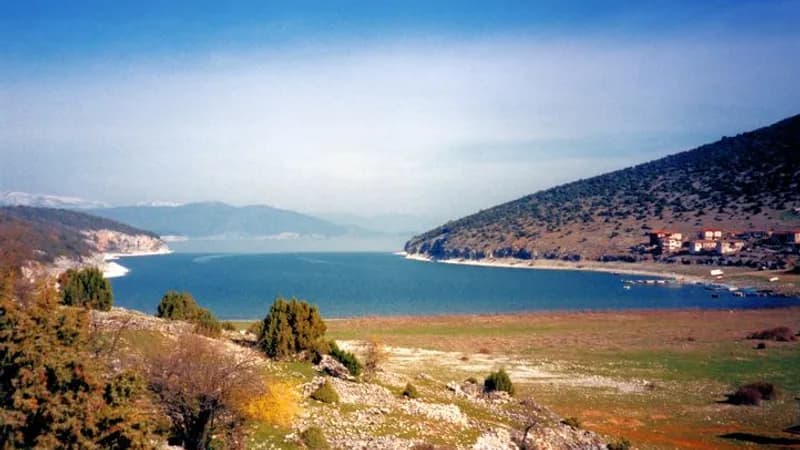
In the region around Lake Prespa, a significant advancement is currently underway that could gradually transform the remote "Lake Garda analogy of the Balkans" into a more accessible, sustainable travel destination: The EU-funded establishment of a border crossing between North Macedonia and Greece, along with the expansion of eco-friendly tourist routes, has received the green light - a step with tangible impacts for travelers off the beaten path.
In December 2024, the cross-border INTERREG program "Greece-North Macedonia 2021-2027" approved a strategically important project: the construction of a new border crossing in the Prespa Lake area. The initiative includes the construction of a police customs station on the Greek side as well as the modernization of infrastructure in neighboring North Macedonia. This is accompanied by the expansion of hiking and cycling paths that connect significant natural and cultural spaces. The total budget amounts to approximately 7.7 million euros, financed 80 percent by the EU, with a planned completion by the end of 2027. This expansion aims to strengthen sustainable tourism and better utilize the region's ecological diversity.
At the same time, there is the "EU for Prespa" Fund: a program initiated by the EU and UNDP, which aims to strengthen the region in the long term with nearly 13.7 million euros. It promotes measures for wastewater and waste management, agricultural development, and the improvement of cross-border tourism infrastructure – including paths, energy efficiency, and local rental offers. This not only supports nature and climate protection but also sustainably improves the quality of life and income sources of the communities.
A new approach, a new travel experience
For travel-loving explorers, this holds the potential for real added value: The redesign of the "Markova Noga" border crossing – often a symbol of difficult accessibility – could significantly ease the direct connection between North Macedonia and Greece starting in 2027. This will shorten travel times, making long detours unnecessary. At the same time, the Republic invites new paths into a protected, natural landscape.
The financial support for local accommodations, new hiking and cycling trails, supplemented by educational and marketing projects, further opens the region to individual travelers, nature enthusiasts, and culture lovers. The expansion remains environmentally friendly: In the tradition of existing protected areas such as the Pelister, Galicica, and Prespa National Parks, importance is placed on gentle development.
For LGBTIQ+ travelers, the emerging infrastructure is particularly relevant. New access points create more options for individual, safe, and flexible travel planning – for example, through targeted familiarization tours and networking events that will take place soon to strengthen and connect local providers.
This presents a promising perspective: Those who wish to experience untouched coves, rare bird species, or the quiet stone houses on Agios Achillios can soon look forward to better accessibility and sustainable offerings. Next, it remains to be seen when exactly the "Markova Noga" transition will officially open and how quickly the paths and infrastructure will actually be walkable or drivable.
Thus, nature, culture, and cross-border cooperation merge into a travel offer that equally deserves attention – and slowly, but noticeably, opens up for travelers.
Advertisement
Advertisement
Advertisement
Poll Of The Day
Wie lange sollte dein perfekter Urlaub dauern?
- A.Kurz & knackig
- B.Eine Woche
- C.Zwei Wochen
- D.Drei Wochen+
- E.Je länger, desto besser
- F.Hauptsache überhaupt Urlaub
LGBTIQ+ News

Gen Z altert schneller - Warum junge Körper älter wirken

Proteste gegen Harry Potter - Streit um Rowlings Weihnachtszauber in England

Rücktritt von Bärbel Bas - Bärbel Bas tritt als SPD-Chefin und Arbeitsministerin zurück

Krise in Frankreich - Schweigen zu Senegals Homosexuellen-Verfolgung
Most Read

Advertisement
Video Of The Day
Advertisement
Advertisement
Advertisement
Poll Of The Day
Wie lange sollte dein perfekter Urlaub dauern?
- A.Kurz & knackig
- B.Eine Woche
- C.Zwei Wochen
- D.Drei Wochen+
- E.Je länger, desto besser
- F.Hauptsache überhaupt Urlaub
LGBTIQ+ News
Gen Z altert schneller - Warum junge Körper älter wirken
Proteste gegen Harry Potter - Streit um Rowlings Weihnachtszauber in England
Rücktritt von Bärbel Bas - Bärbel Bas tritt als SPD-Chefin und Arbeitsministerin zurück
Krise in Frankreich - Schweigen zu Senegals Homosexuellen-Verfolgung
Most Read
Advertisement
Video Of The Day
Lichadonisia receives EU funding for sustainable tourism
Harz deploys more rangers on hiking trails
Switzerland Plans Transit Fee for Foreign Drivers
Belgium unites two official languages in everyday life

Geschäftsstelle des NaturWanderpark delux (c/o Eifel Tourismus GmbH)
Cruising Belgrade

L'EUFORIA
Fähre Elfenau
Wine Market on the Cologne Rhine – Opening Day
Water & Sound Festival: Waterways Re:Imagined – Entry
Summer Cinema Open Air - Regional Short Films: Deer on the Prowl