
.webp&w=3840&q=75)



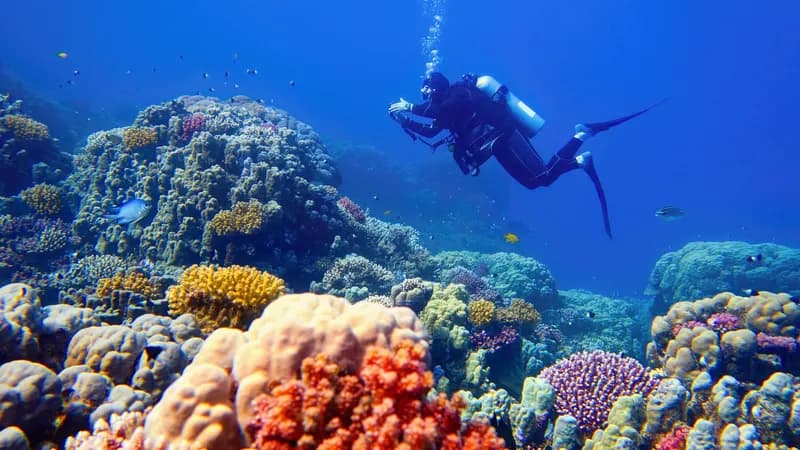
Record bleaching at the Great Barrier Reef: Heatwaves drive coral loss
Record bleaching threatens Great Barrier Reef

kk
The Great Barrier Reef, a natural icon off the northeast coast of Australia, is currently facing an unprecedented crisis. Coral reefs, once full of color and life, are bleaching and dying like never before. New analyses from leading ocean researchers depict a picture of unparalleled destruction, triggered by massive heatwaves. While the Australian government struggles to protect this unique World Heritage site, climate change threatens to undermine decades of conservation efforts.
Record losses due to extreme heat
Just a few years ago, a visit to the Great Barrier Reef sparked breathless excitement: Colorful fish, vibrant corals, and an ecosystem that is hard to find anywhere else in the world. However, with the summer of 2024/25, this splendor has taken a dramatic hit. According to the renowned Australian Institute of Marine Science (AIMS), coral cover in the northern part has declined by a quarter within a year, and in the southern region, it has nearly decreased by a third – the largest losses since monitoring began almost four decades ago.
The main cause is the increasing global warming. Due to extraordinary heatwaves in the Australian summer, sea temperatures reached new record highs. The corals could not withstand this stress. While they live in symbiosis with single-celled algae under normal conditions – which provide them with nutrients and colors – they expel these algae under heat stress. The result: bleaching and often the death of entire reefs.
In addition to record temperatures, cyclones, flooding, and an invasion of crown-of-thorns starfish have also severely affected the delicate natural wonder. Nonetheless, recent studies indicate that bleaching is primarily responsible for the spectacular decline of the corals.
Endangered World Heritage for Decades
The Great Barrier Reef has been considered a UNESCO World Heritage Site since 1981 – a title that can only be held by the most spectacular and worthy of protection landscapes on Earth. However, warnings of a impending downgrading of this status by UNESCO have been increasing since the late 1990s. Since 1998 alone, there have been eight major bleaching events, each triggered by above-average hot summers.
The Australian government recently tackled the problem with billion-dollar protection packages that focus on both research and sustainable tourism projects. In the early 2020s, the reef experienced a slight recovery, which sparked hope. Now, with this year's record event, this sense of optimism has once again been overshadowed by a bitter setback.
Concerns are also growing on a global level. International climate meetings, such as the recent UN climate conference, increasingly emphasize the central role of healthy coral reefs for marine species and climate protection. Not only fisheries, but also the biodiversity of the oceans significantly depends on these ecosystems. According to new estimates, reefs like the Great Barrier Reef, despite their relatively small area, harbor up to a quarter of all marine species.
Voices from Science and Nature Conservation
"The evidence in the current report shouts it out loud: A strong climate target for 2035 is now necessary! Unfortunately, this year's coral bleaching has destroyed all hopes of recovery in recent years." – <strong>Richard Leck</strong>, Head of Ocean Program WWF Australia
Research groups around the world are expressing similarly drastic concerns. They emphasize not only the ecological but also the cultural and economic significance of the reef. Experts are already warning: If global warming is not limited to 1.5 degrees, nearly all reefs off the coast of Australia could die by the middle of the century.
Hope and pressure for action for the future
The latest results have once again made international headlines – and are set to test Australia’s climate policy objectives. The government plans to soon publish new, ambitious emission targets to protect the reef and its biodiversity. At the same time, better protection measures for tourism and fishing are being introduced to minimize the impact on the corals.
Researchers are also working on new technologies, such as the controlled settlement of heat-resistant coral species or innovative shading techniques for particularly endangered areas. Nevertheless, it is clear: without a rapid, global change in climate protection, these technical measures will hardly be sufficient to permanently preserve the largest living structure on our planet.
Anyone who wants to engage further with the topic or seek information will find comprehensive content and current research findings from respected environmental organizations and the official monitoring bodies of UNESCO.
Advertisement
Advertisement
Advertisement
Poll Of The Day
Wie lange sollte dein perfekter Urlaub dauern?
- A.Kurz & knackig
- B.Eine Woche
- C.Zwei Wochen
- D.Drei Wochen+
- E.Je länger, desto besser
- F.Hauptsache überhaupt Urlaub
LGBTIQ+ News

Der Oktober hat mehr zu bieten - SCHWULISSIMO Oktober 2026: Die neuen Ausgaben

Ashton Summers geht viral - User küren Darsteller für Hüftschwung zum „Golden Boy“

Wirbel um Jockstrap - Nasses Tennis-Outfit überrascht Fans und Community

Ein Kuss verändert alles - Bisexualität im Fokus: Neue Netflix-Serie „Minerva Academy“
Most Read



Advertisement
Video Of The Day
Advertisement
Advertisement
Advertisement
Poll Of The Day
Wie lange sollte dein perfekter Urlaub dauern?
- A.Kurz & knackig
- B.Eine Woche
- C.Zwei Wochen
- D.Drei Wochen+
- E.Je länger, desto besser
- F.Hauptsache überhaupt Urlaub
LGBTIQ+ News
Der Oktober hat mehr zu bieten - SCHWULISSIMO Oktober 2026: Die neuen Ausgaben
Ashton Summers geht viral - User küren Darsteller für Hüftschwung zum „Golden Boy“
Wirbel um Jockstrap - Nasses Tennis-Outfit überrascht Fans und Community
Ein Kuss verändert alles - Bisexualität im Fokus: Neue Netflix-Serie „Minerva Academy“
Most Read
Advertisement
Video Of The Day
Corno Beach on Lake Garda: Erosion Requires Action
Last-Chance Tourism hardly increases climate awareness
Lichadonisia receives EU funding for sustainable tourism

Cousteau's Underwater Project: Précontinent II as a Milestone in Deep-Sea Research

The Reefs Resort & Club

Sunbreeze Suites

Coral Sea Resort

Coral Reef Club

Under Water Pride

Summer Cinema Open Air: Radio Rock Revolution

Middance Crisis – The Party for Groundhogs and Early Risers (Summer Special)