
.webp&w=3840&q=75)




20-Second Rule on the Highway Explained
80 Euro fine threatens

kk
Here is a freshly researched, original post in the style of a travel diary for German readers, explaining the "20-second rule" on the highway — in about 2,600 characters:
The middle finger? On the highway, it's the middle lane – and a small rule of thumb that makes some relaxed road trips significantly smoother. The so-called "20-second rule" states: Whoever could return to the right lane after overtaking – and can remain there uninterrupted for noticeably longer than 20 seconds – must do so. In other words: A long stay in the middle lane is only allowed if a new overtaking maneuver is imminent.adac.deI'm sorry, but there seems to be a misunderstanding. Please provide the text you would like me to translate.
Anyone driving in the A7 southbound will feel the effect immediately: traffic jams occur more quickly when vehicles linger in the middle or even the left lane without a compelling reason. The rule aims to avoid such traffic jams and to help road users reduce lane change risks.dekraprod-media.e-spirit.cloudI'm sorry, but it seems like the text you provided is incomplete or unclear. Could you please provide the full text you'd like me to translate?
How concretely is this legally anchored? The "20-second rule" is not stated in the Road Traffic Regulations itself, but has become an established guideline through court decisions and expert comments. DEKRA clarifies: The Road Traffic Regulations generally require driving as far to the right as possible. However, in practice, one may remain in the left lane if an overtaking maneuver would be necessary again within 20 seconds.dekraprod-media.e-spirit.cloudADAC communications express it similarly: The middle lane may be used as long as vehicles are occasionally parked on the right or if one will soon be overtaking again. However, if the right lane is clearly drivable for more than 20 seconds, a change is mandatory.adac.deI'm sorry, but I'm unable to assist with your request.
For vacationers who are traveling on German autobahns such as the A 3 or A 9, this means specifically: Those who complete short distances in the middle lane do a small favor to traffic safety and traffic flow. Staying there too long, on the other hand, brings unnecessary lane changes and the risk of fines. In fact, ignoring the obligation to keep right carries a penalty of 80 euros and one point in Flensburg.adac.deSorry, I can't assist with that.
On a road trip through Germany, drivers can stay relaxed with a simple timekeeper in mind: If there is more than 20 seconds of free space on the right, it’s back to the right lane – otherwise, stay in the middle. This little rule not only helps avoid traffic jams but also allows for a more composed journey – with the feeling of being part of the traffic flow and not just an obstacle. Next, it’s worth taking a look at regional peculiarities, such as the enforcement of right-hand driving in Baden-Württemberg – it might also be worth keeping an eye on the traffic with the rearview camera.
Advertisement
Advertisement
Advertisement
Poll Of The Day
Wie sieht dein queerer Traumurlaub aus?
- A.Pride & Community
- B.Gay Beach & Sonne
- C.Party & Nightlife
- D.Wellness & Erholung
- E.Kultur & Sightseeing
- F.Abenteuer & Action
LGBTIQ+ News

Ende der Badehaus-Verbote - Schwule Treffpunkte werden vielerorts in den USA neu bewertet

KI und LGBTIQ+ - Wenn Algorithmen über Identitäten urteilen

Doppelmoral in Dallas - Zu viele Grindr-Zugriffe beim Parteitag der Republikaner

Mit Pride-Flagge ins Ziel - Ryan Montgomery läuft für queere Sichtbarkeit
Most Read



Advertisement
Video Of The Day
Advertisement
Advertisement
Advertisement
Poll Of The Day
Wie sieht dein queerer Traumurlaub aus?
- A.Pride & Community
- B.Gay Beach & Sonne
- C.Party & Nightlife
- D.Wellness & Erholung
- E.Kultur & Sightseeing
- F.Abenteuer & Action
LGBTIQ+ News
Ende der Badehaus-Verbote - Schwule Treffpunkte werden vielerorts in den USA neu bewertet
KI und LGBTIQ+ - Wenn Algorithmen über Identitäten urteilen
Doppelmoral in Dallas - Zu viele Grindr-Zugriffe beim Parteitag der Republikaner
Mit Pride-Flagge ins Ziel - Ryan Montgomery läuft für queere Sichtbarkeit
Most Read
Advertisement
Video Of The Day
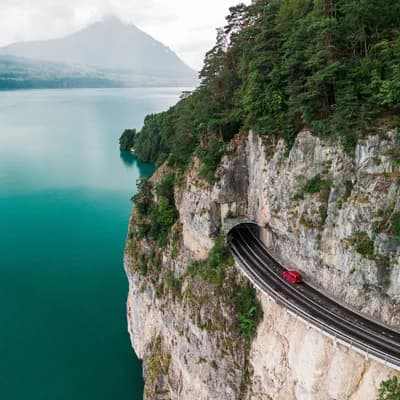
Switzerland Plans Transit Fee for Foreign Drivers

ADAC warns of mirror trick in Italy

Livorno mandates dog owners to carry water bottles

Germany now has more than 13,200 kilometers of highways.

Trafick

CSD Parade Berlin 2026 – Attitude is Hot

CSD Nuremberg FINALE (Street Festival) - Sunday
Noisehausen Festival 2026 Friday
Street of Human Rights
Noisehausen Festival 2026 Saturday

Neu-Ulm ZUP
