.webp&w=3840&q=75)



Eyam: Quarantine as an Example of Solidarity in the Plague
Eyam: Quarantine as a Success Model

kk
The small village of Eyam in the idyllic Peak District of northern England appears at first glance to be a peaceful place, far removed from great dramas. Yet the alleyways, historic cottages, and the old church tell the story of one of the greatest sacrifices that a community made for the well-being of others – and of a dark chapter whose resonance still touches visitors today. Eyam is known as the "Plague Village," a name that has etched itself deeply into the collective memory of England.
A village – and the beginning of a tragedy
In late summer 1665, fate took its course. Eyam, then a small village with about 800 inhabitants, was struck as if by lightning when an innocuous-looking fabric package was brought in from London. Uninvited travelers – plague-infested fleas – had hidden in the cloth and, shortly after their arrival, triggered a devastating epidemic. The first death, George Viccars, was buried just a few days after the package was opened, and soon a dreadful disease spread through the village: the bubonic plague.
What followed was a catastrophe whose dimensions remain extraordinary even by European standards: Almost a third of the population lost their lives within a few months. Entire families disappeared, isolated from the rest of the world and trapped in a spiral of fear, loss, and deprivation. The few survivors had to cope not only with the loss of their loved ones but also with the stigma directed at them as a result of the epidemic.
The quarantine – courage and foresight in dark times
But Eyam did not simply remain a victim – it became a symbol of solidarity and medical progress. The two clergymen of the village, <strong>William Mompesson</strong> and <strong>Thomas Stanley</strong>, managed to convince the residents to take radical measures: They declared a complete quarantine that no one was allowed to break. A circle of warning signs and boundary stones protected the neighboring villages from the plague spreading.
With incredible self-discipline, the village community adhered to the guidelines. Services were held outdoors, the dead were buried directly at their places of death, and the trade in food took place contactlessly: wealthy benefactors, such as the Earl of Devonshire, left supplies at the edge of the village, for which the Eyam residents paid using vinegar-soaked coins placed in stone basins – an unexpectedly effective disinfectant.
The Legacy of the Plague Epidemic
The brutality of the epidemic left deep marks. At the end of this nearly one-and-a-half-year ordeal, Eyam was nearly wiped out: 260 people from 76 families did not survive the quarantine. Particularly tragic is the fate of Elizabeth Hancock – she lost her husband and six children in just eight days. Nevertheless, almost no one broke the quarantine; the fear of exclusion, as well as the sense of responsibility towards the surrounding communities, were too great.
The plague of Eyam is today an internationally recognized example of the effectiveness of early quarantine measures. Recent research suggests that the survivors and their descendants possess a rare genetic mutation that provides some protection against diseases like the plague. These genetic traces are still traceable in some families today, making Eyam a fascinating research site for medical professionals.
Voices from the Past and Present
"The history of the village and its unique charm make it a must for any visitor to Derbyshire who truly wants to soak up the atmosphere of the area." – Grace Day, staff member of the Eyam Museum
The tradition of the villagers is marked by stories of self-sacrifice, solidarity, and extraordinary courage. Many descendants of surviving families still live in Eyam and are committed to preserving this special memory.
Eyams Platz in the Present
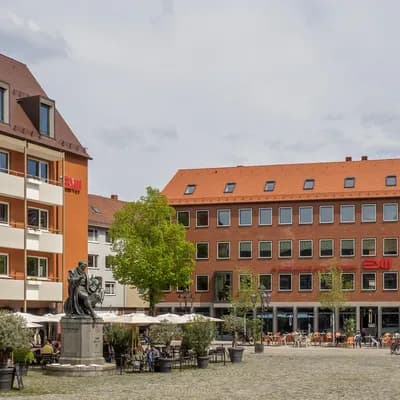
Today, Eyam has become a popular memorial site. Places like the Eyam Museum, the old plague graves, the famous boundary stone, and the church, as well as the manor house, which has been in the family since the 17th century, bear witness to the extraordinary history of the village. Every year on the last Sunday in August, an open-air mass commemorates those who gave their lives to protect others. The story of Eyam remains more relevant than ever and is cited worldwide as an educational example of crisis management, medical research, and community action—especially in times of global epidemics.
Eyam impressively reminds us that actions can save many lives – a message that has hardly lost its relevance today, in light of modern health threats like Covid-19. Those visiting the Peak District should take the time to let this extraordinary place of authentic history affect them.
For further information, we recommend visiting the Eyam Museum as well as reports from the British health authorities or the World Health Organization, which offer fascinating insights into historical and current knowledge about plague management.
Advertisement
Advertisement
Advertisement
Poll Of The Day
Wie sieht dein queerer Traumurlaub aus?
- A.Pride & Community
- B.Gay Beach & Sonne
- C.Party & Nightlife
- D.Wellness & Erholung
- E.Kultur & Sightseeing
- F.Abenteuer & Action
LGBTIQ+ News

Joe Locke in heikler Rolle - Geschichte über verbotene schwule Liebe in „Black Church Bay“

Freizügige Bilder im Wahlkampf - Zwischenwahlen mit sexy Leder-Look?

Der erste schwule US-Präsident - Buttigieg sieht seine Chance für 2028

Kieferbruch bei Timo Cavelius - Olympia-Traum bei schwulem Champion in Gefahr
Most Read


Advertisement
Video Of The Day
Advertisement
Advertisement
Advertisement
Poll Of The Day
Wie sieht dein queerer Traumurlaub aus?
- A.Pride & Community
- B.Gay Beach & Sonne
- C.Party & Nightlife
- D.Wellness & Erholung
- E.Kultur & Sightseeing
- F.Abenteuer & Action
LGBTIQ+ News
Joe Locke in heikler Rolle - Geschichte über verbotene schwule Liebe in „Black Church Bay“
Freizügige Bilder im Wahlkampf - Zwischenwahlen mit sexy Leder-Look?
Der erste schwule US-Präsident - Buttigieg sieht seine Chance für 2028
Kieferbruch bei Timo Cavelius - Olympia-Traum bei schwulem Champion in Gefahr
Most Read
Advertisement
Video Of The Day

World AIDS Day: Cologne Cathedral as a Sign of Solidarity

Lichadonisia receives EU funding for sustainable tourism

LGBTQ+ Travel Gifts: Shared Experiences Foster Closeness and Community
Bad Kissingen: Spa Town Unites Tradition and Modern Diversity

From the Region: Ethiopia Transformed

YAY Bielefeld

QUEER AS PUNK NRW Premiere

die wohngemeinschaft • Café • Bar • Hostel • Meeting Spaces • Theater
dyke*march Demo
Culture Month - Reading with Uwe Daniel

Exmouth Arms