
.webp&w=3840&q=75)



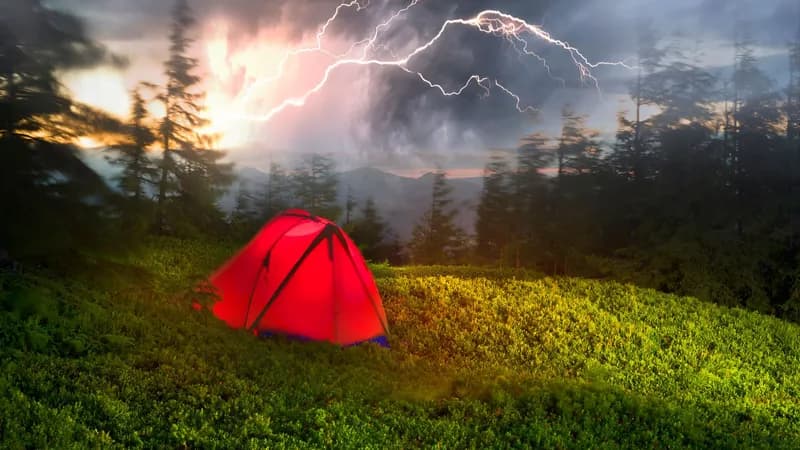
Thunderstorms at Campsites: Experts Warn of Life-Threatening Danger
Tents do not provide lightning protection

kk
In the midst of a cozy camping adventure, a dark sky suddenly looms, lightning flashes, thunder rumbles – and the familiar...
In the midst of a cozy camping adventure, a dark sky suddenly looms, lightning flashes, thunder rumbles – and the familiar tent offers less protection than hoped. Outdoor enthusiasts repeatedly underestimate the danger posed by a storm at the campsite. Experts warn that camping presents a "danger to life and limb" as soon as a storm approaches. But what is the source of this risk? And how can one best protect themselves while traveling or at festivals when the sky turns threatening?
Natural disaster lightning – underestimated danger while camping
Tents are made of lightweight fabric and are usually constructed with metal poles, which offer no real protection when lightning strikes. While modern camping shelters protect against rain and wind, they are nearly ineffective against the drastic electrical energy of a lightning bolt. As leading lightning protection organizations emphasize, the metal poles may act as an additional lightning rod at the moment of danger and conduct the current uncontrollably. According to the German Association for Electrical Engineering (VDE), a so-called voltage funnel occurs when lightning strikes the tent poles or the ground around the tent. This leads to a high risk of step voltage – that is, electrical currents in the ground that can be life-threatening for anyone in close proximity.
Statistically speaking, several people across Germany are injured or even killed each year by lightning strikes outdoors, with the tent often misinterpreted as a safe refuge. It is especially critical when the campsite is already soaked from heavy rain – water conducts electrical current even more efficiently.
Correct behavior: Seeking protection with caution
Lightning protection experts and safety advisors recommend: As soon as a thunderstorm is imminent, the tent must be vacated. Ideal places for protection are solidly constructed buildings or – if necessary – cars, because the so-called Faraday cage protects occupants from electric charge. If neither of these options is available, there are at least some emergency measures:
- Keep your distance from the tent poles and walls, and sit or crouch down as small as possible in the center of the tent.
- Even on the ground, you are by no means safe: An insulating air mattress does not help, as the pressure from an impact can easily penetrate it.
- Remove all electrical cables and ensure that no metallic objects are in direct contact.
- Plastic plates or additional rubber caps on tent poles are not a substitute for proper grounding and offer no protection.
- Never pitch the tent in an exposed position, such as alone on hills, at the edges of forests, near masts, or under solitary trees. Maintain a distance of at least three meters from other tents and vehicles. Completely avoid using metal guy lines between tents.
Especially at festivals or large events, which take place more frequently in the summer, many visitors underestimate the danger. The German Weather Service and the ADAC confirm that sudden, locally limited severe weather events are on the rise – particularly due to climate change.
Voices and Perspectives of Experts
"Many underestimate that tents do not provide lightning protection. In case of an emergency, a solidly built building or a car should always be chosen as a refuge." — <strong>Dr. Stefanie Werner</strong>, VDE Specialist Committee Lightning Protection
Meteorologists also urge to take the situation seriously. While high voltage can be deadly in fractions of a second, prudent actions can significantly reduce the risk. According to the German Statutory Accident Insurance, numerous accidents in the camping sector have been reported in recent years, where inadequate safety measures were crucial.
What to do in case of a storm warning and what does the future hold?
With the increasingly extreme weather events occurring in Europe, questions about safe outdoor living are coming to the forefront. In the future, smart devices, specialized weather warning apps, and improved infrastructure at campsites could help respond more quickly to approaching severe weather. Some campsites are already equipping themselves with solid shelters and are raising awareness among their guests about potential hazards. Nevertheless, the most important advice remains: check weather reports, seek shelter in good time, and never rely on the deceptive safety of a tent.
For more information on safe behavior during severe weather at campsites, we recommend the official pages of the German Weather Service, the brochures of the VDE, and the safety guides of the ADAC.
Advertisement
Advertisement
Advertisement
Poll Of The Day
Wann beginnt für Dich der Urlaubskick?
- A.Schon Monate vorher, direkt nach dem Abschicken der Buchung
- B.In den Wochen davor beim Recherchieren von Ausflugszielen und Restaurants
- C.Beim Kofferpacken am Tag vor der Abreise
- D.Am Tag der Abreise auf dem Weg zum Flughafen oder Bahnhof
- E.Erst in dem Moment, in dem ich das Hotelzimmer betrete
- F.Der Kick kommt gar nicht, ich bin vor der Abreise nur gestresst
LGBTIQ+ News

Heated Rivalry im Kino - Connor Storrie verkürzt zudem die Wartezeit auf Staffel 2

Letzte Küsse in der Kutsche - Central Park verliert Liebeszauber

Schwuler Volleyballstar - Rui Takahashi berichtet vom Rückhalt seines Bruders

Schwere Vorwürfe gegen Graham - Dokumentation über Sexleben des verstorbenen US-Senators
Most Read



Advertisement
Video Of The Day
Advertisement
Advertisement
Advertisement
Poll Of The Day
Wann beginnt für Dich der Urlaubskick?
- A.Schon Monate vorher, direkt nach dem Abschicken der Buchung
- B.In den Wochen davor beim Recherchieren von Ausflugszielen und Restaurants
- C.Beim Kofferpacken am Tag vor der Abreise
- D.Am Tag der Abreise auf dem Weg zum Flughafen oder Bahnhof
- E.Erst in dem Moment, in dem ich das Hotelzimmer betrete
- F.Der Kick kommt gar nicht, ich bin vor der Abreise nur gestresst
LGBTIQ+ News
Heated Rivalry im Kino - Connor Storrie verkürzt zudem die Wartezeit auf Staffel 2
Letzte Küsse in der Kutsche - Central Park verliert Liebeszauber
Schwuler Volleyballstar - Rui Takahashi berichtet vom Rückhalt seines Bruders
Schwere Vorwürfe gegen Graham - Dokumentation über Sexleben des verstorbenen US-Senators
Most Read
Advertisement
Video Of The Day
Bora, Mistral and Meltemi threaten campers across Europe

Safety at Sea: Experts Warn Against Carelessness in Summer
Tsunami Warning: How Travelers Can Quickly Ensure Their Safety
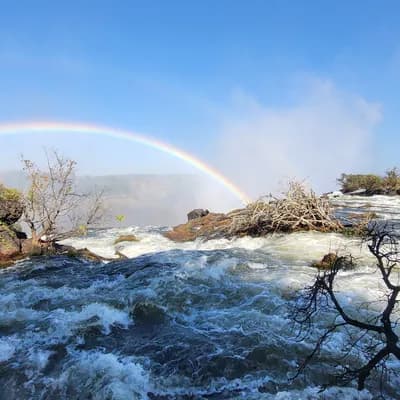
Extreme Tourism: Adventurous Experiences from Heights to Depths

Fritz Berger Trier
CAMP MUNICH
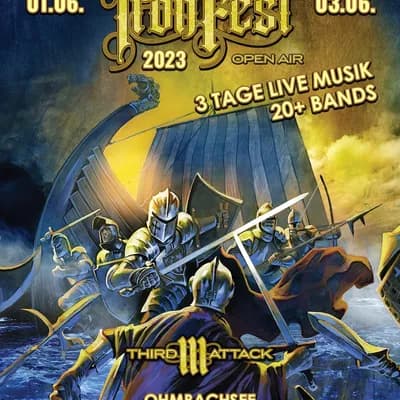
Iron Fest Open Air - Hard Rock und Heavy Metal Festival

Under Canvas Grand Canyon

Noisehausen Festival 2026 Saturday
Summer Cinema Open Air: A Simple Accident
Noisehausen Festival 2026 Friday