
.webp&w=3840&q=75)



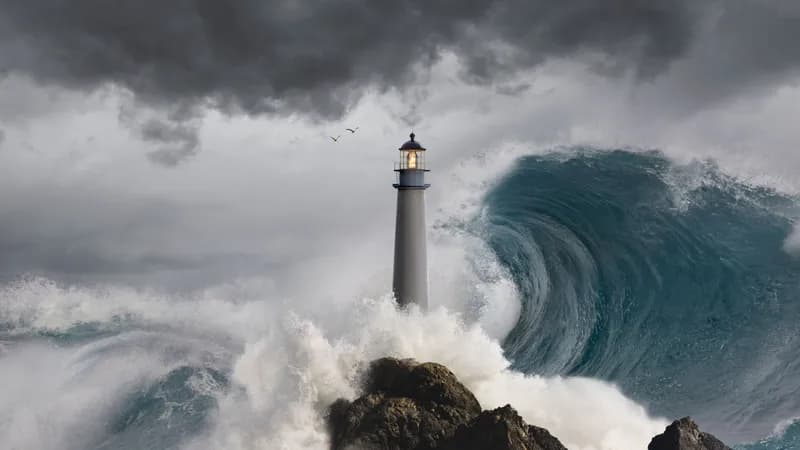
Tsunami Warning: How Travelers Can Quickly Ensure Their Safety
Every meter counts

kk
After a tsunami warning, every second – and every meter of height – often counts. Recently, earthquakes near the coasts of Indonesia and...
After a tsunami warning, every second and every meter in elevation often counts. Recent earthquakes near the coasts of Indonesia and the Philippines have dramatically shown how suddenly the danger of approaching tidal waves can arise in popular vacation areas. For travelers in coastal areas, knowledge and practiced response can be crucial to ensuring their safety and that of others with a few clear steps.
The most important things at a glance
- Tsunami warnings are particularly common after strong earthquakes in coastal regions.
- Authorities warn primarily in risk areas via sirens, loudspeakers, mobile phones, or media.
- Natural signs like receding water or loud roaring indicate acute danger.
- Safe havens are elevated locations or the upper floors of stable buildings.
- Only after official "all clear" should the return to the danger zone be undertaken.
Preparations for the Emergency
For a relaxing holiday by the sea, the German Research Centre for Geosciences GFZ recommends familiarizing yourself with the designated escape routes and emergency plans immediately upon arrival. In many hotels in the Pacific or Indian regions, evacuation routes have become standard, but not every destination is prepared. Especially in Asia, authorities in at-risk areas use modern warning systems – such as mobile notifications or traditional sirens. These systems provide crucial minutes, but especially with locally generated tsunamis, there is very little time to react.
This is how to recognize acute danger.
A noticeable earthquake near the coast is the most important warning signal. Anyone experiencing this should seek open space, keep a distance from walls, and immediately move inland or to higher ground after it subsides. The crucial tip is: every additional meter of height can be life-saving, as confirmed by Eva Hecht, geophysicist at GFZ Potsdam.
"Especially in shallow coasts, speed counts; it is better to take a bad escape route than none at all."
It is also important to observe natural signs: If the sea unusually recedes far or a loud rumbling is heard, there is hardly a minute left to escape. In such cases, waiting for official instructions is of no help – speed and caution matter.
Behavior when traveling in tsunami-prone areas
Those who have to forgo natural elevations should look for safe places in multi-story buildings, preferably reached via stairs. Elevators can fail in emergencies due to power outages. In the event of an impending tsunami, unnecessary luggage should be left behind, and only essential items such as identification, medications, and a mobile phone should be taken. Even after the first wave, danger still exists – often the most destructive wave follows later.
Important questions on the topic
How does a local tsunami risk differ from a distant tsunami risk?Local tsunamis often reach the coast just a few minutes after the earthquake, while waves from further away allow more time for warning. Quick response is crucial in local events.
How reliable are warning systems worldwide?Modern early warning systems in Japan, Indonesia, and the USA achieve high reliability for distant tsunamis, while there are still gaps in some regions around the Mediterranean.
Whether it's a tropical dream beach in Thailand, a walk along the Amalfi Coast, or an adventure in Hawaii: For travelers, it helps to keep head and senses alert. Knowing the essential routes can become existential in a matter of moments. As long as sirens, warning signs, and earthquakes are rare, the fascination of the sea remains unclouded – without preparation, however, it can quickly turn into danger.
Advertisement
Advertisement
Advertisement
Poll Of The Day
Wann beginnt für Dich der Urlaubskick?
- A.Schon Monate vorher, direkt nach dem Abschicken der Buchung
- B.In den Wochen davor beim Recherchieren von Ausflugszielen und Restaurants
- C.Beim Kofferpacken am Tag vor der Abreise
- D.Am Tag der Abreise auf dem Weg zum Flughafen oder Bahnhof
- E.Erst in dem Moment, in dem ich das Hotelzimmer betrete
- F.Der Kick kommt gar nicht, ich bin vor der Abreise nur gestresst
LGBTIQ+ News

Schwuler Volleyballstar - Rui Takahashi berichtet vom Rückhalt seines Bruders

Schwere Vorwürfe gegen Graham - Dokumentation über Sexleben des verstorbenen US-Senators

Haiti verschiebt die Wahlen - LGBTIQ+-Aktivisten schlagen Alarm

Neue Vorwürfe in Turkmenistan - Schwuler Mann berichtet von Folter
Most Read



Advertisement
Video Of The Day
Advertisement
Advertisement
Advertisement
Poll Of The Day
Wann beginnt für Dich der Urlaubskick?
- A.Schon Monate vorher, direkt nach dem Abschicken der Buchung
- B.In den Wochen davor beim Recherchieren von Ausflugszielen und Restaurants
- C.Beim Kofferpacken am Tag vor der Abreise
- D.Am Tag der Abreise auf dem Weg zum Flughafen oder Bahnhof
- E.Erst in dem Moment, in dem ich das Hotelzimmer betrete
- F.Der Kick kommt gar nicht, ich bin vor der Abreise nur gestresst
LGBTIQ+ News
Schwuler Volleyballstar - Rui Takahashi berichtet vom Rückhalt seines Bruders
Schwere Vorwürfe gegen Graham - Dokumentation über Sexleben des verstorbenen US-Senators
Haiti verschiebt die Wahlen - LGBTIQ+-Aktivisten schlagen Alarm
Neue Vorwürfe in Turkmenistan - Schwuler Mann berichtet von Folter
Most Read
Advertisement
Video Of The Day

Thunderstorms at Campsites: Experts Warn of Life-Threatening Danger

Safety at Sea: Experts Warn Against Carelessness in Summer

Last-Chance Tourism hardly increases climate awareness
Extreme Tourism: Adventurous Experiences from Heights to Depths

Sylter Welle

Ten Thousand Waves

Titanic Story

La Sirène

Water & Sound Festival: Waterways Re:Imagined – Entry
Water & Sound Festival: Waterways Re:Imagined – Conversation with Sathnam Sanghera

CSD Cham Demozug